For years, conversations about African innovation have largely focused on technology, finance, and entrepreneurship. But far from startup boardrooms and venture capital headlines, another Nigerian was quietly building impact in one of the world’s most overlooked fields, wildlife conservation.
Her work would eventually earn her global recognition and one of the most respected awards in environmental leadership.
Meet Iroro Tanshi, the Nigerian scientist helping protect endangered species while changing how conservation is done across Africa.
A Childhood Fascination That Became a Mission
Growing up in Nigeria, Iroro developed an early curiosity about nature and wildlife. But unlike many career paths considered prestigious or financially secure, conservation science was rarely discussed as a serious profession.
In many African countries, environmental work struggles with low funding, limited awareness, and little public attention. Yet Iroro pursued it anyway.
Over time, she became deeply interested in bats, animals often misunderstood, feared, or ignored despite their massive ecological importance.
Bats help pollinate plants, disperse seeds, and control insect populations. Entire ecosystems depend on them. But across Africa, habitat destruction, urban expansion, hunting, and climate pressures have pushed many bat species toward decline.
One species in particular caught her attention: the critically endangered short-tailed roundleaf bat found in parts of West Africa.
Protecting it would become the center of her life’s work.
The Research That Put Nigeria on the Global Conservation Map
As Iroro advanced in her research career, she focused on combining scientific fieldwork with community-based conservation. Rather than treating conservation as something imposed on local communities, she believed people living near wildlife habitats had to become part of the solution.
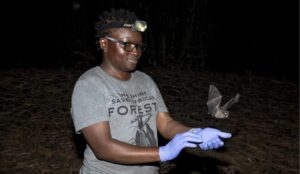
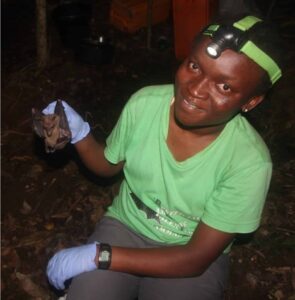
Her work involved tracking endangered bat populations, studying habitat loss, building conservation education programs, working directly with local communities and creating sustainable protection strategies
This approach helped bridge a gap that often exists in conservation efforts across developing countries, where scientific goals sometimes clash with economic realities faced by local populations.
Iroro’s work stood out not just because of the science, but because of the model behind it: conservation rooted in African realities.
Winning One of the World’s Most Prestigious Conservation Prizes
Her efforts eventually gained international recognition when she received the Whitley Award, often referred to as the “Green Oscar.”
Presented by the Whitley Fund for Nature, the award recognizes exceptional conservation leaders from around the world who are driving grassroots environmental impact.
The prize placed Iroro among a select group of global environmental changemakers and brought international attention to both her research and Nigeria’s conservation landscape.
For many Nigerians, the recognition was significant not only because of the award itself, but because it highlighted an area where African scientists are rarely visible in global conversations.
Why Her Work Matters Beyond Wildlife
At first glance, protecting bats may seem far removed from everyday life. But conservation directly affects agriculture, food systems, climate resilience, and public health.
When ecosystems collapse, the effects ripple outward. By protecting endangered species and their habitats, scientists like Iroro are helping preserve ecological systems that millions of people indirectly rely on.
Her work also challenges a deeper misconception that Africa only participates in global science as a recipient rather than a contributor.
A New Generation of African Scientists
Iroro Tanshi represents a growing generation of African researchers tackling global challenges from within the continent itself.
Instead of waiting for foreign institutions to lead the work, these scientists are building local research capacity, leading field studies, producing globally respected data and creating solutions tailored to African ecosystems
Their work is reshaping how African expertise is viewed internationally.
The Bigger Lesson
Dr. Iroro Tanshi’s story is not just about winning an award. It is about persistence in a field with limited visibility, choosing impact over popularity and proving that world-class innovation can emerge from places and sectors the world often overlooks.
While many chase attention in crowded industries, Iroro built a body of work helping protect Africa’s biodiversity while placing Nigerian scientific leadership on the global stage.
And sometimes, that kind of impact changes far more than headlines ever could.