The global hair extensions industry is worth billions, but for decades one major problem has remained unresolved: the gap between quality, safety, and ethical sourcing, especially for textured hair consumers.
Now, Black-owned beauty startup Ruka Hair is trying to change that.
The company has raised $4.5 million in Series funding to scale its lab-grown, biotech hair fiber technology and expand internationally, including into the United States.
At the center of this movement is a bigger ambition: rebuilding how hair extensions are made from the ground up.
A beauty problem that became a science problem
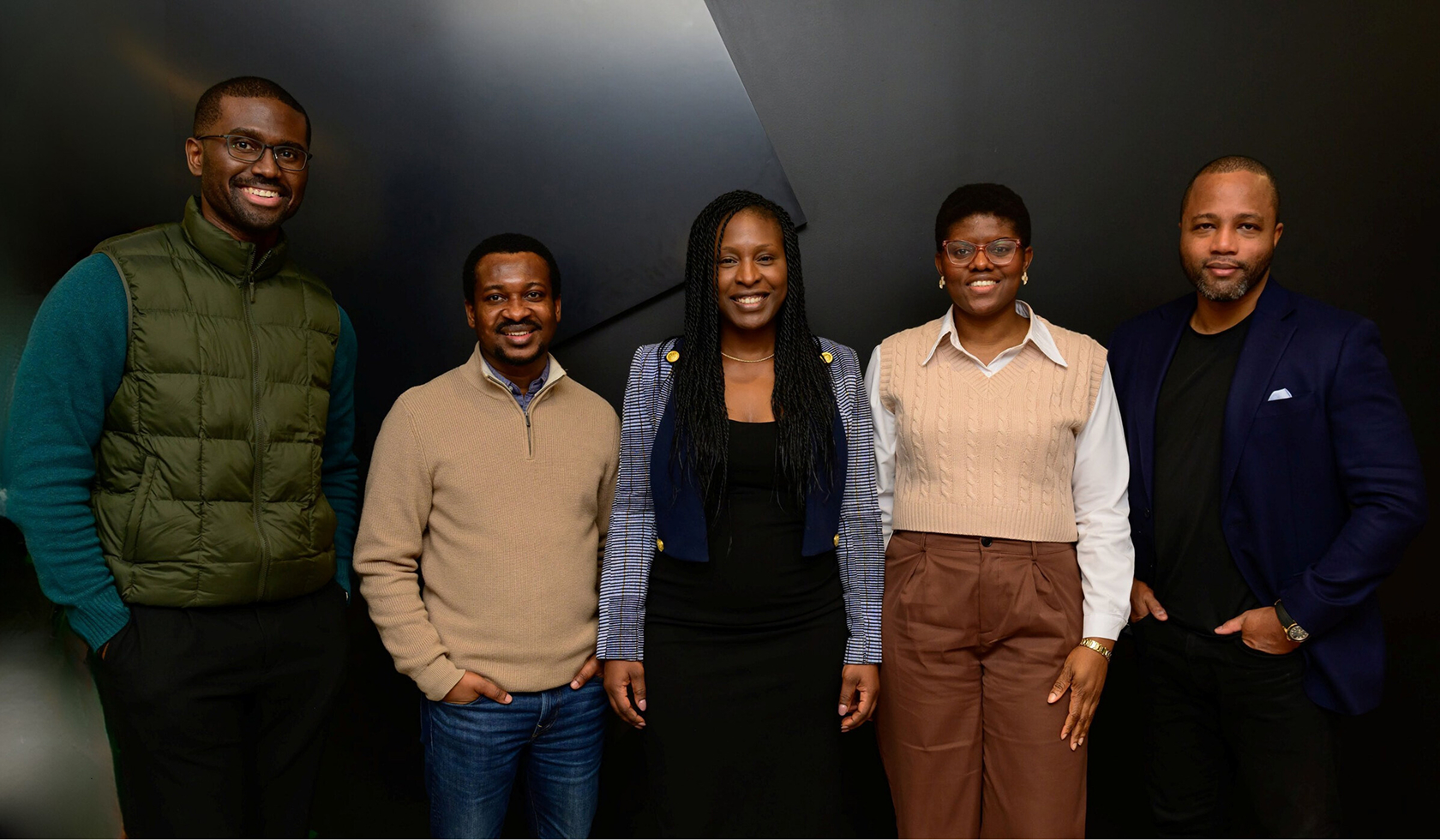
Ruka was co-founded in 2020 by Tendai Moyo and Ugo Agbai, who saw a long-standing issue in the beauty industry. Traditional hair extensions come with several persistent challenges, including unclear or unethical sourcing of human hair, heavy reliance on plastic-based synthetic fibers, and poor performance for textured hair types.
For many customers, this meant having to choose between look, comfort, safety, or ethics, but rarely getting all of them together.
Ruka set out to eliminate that trade-off completely.
The innovation: lab-grown hair fiber
At the core of Ruka’s technology is a patent-pending material called “Synths 2,” a collagen-based, lab-grown fiber designed to mimic the look and feel of natural hair.
Unlike traditional synthetic fibers made from plastic polymers, Ruka’s material is biodegradable, hypoallergenic, designed for curls, coils, and kinks, and engineered to behave like real hair in styling and movement.
The company describes it as a new fiber platform for textured hair rather than just another beauty product.
In simple terms, they are not only selling extensions, they are attempting to rebuild the material itself.
Why investors are paying attention
The $4.5 million funding round was co-led by Freedom Trail Capital and Henkel Ventures, with participation from other investors across consumer goods and venture capital.
What attracted investor interest was not just the beauty market itself, but the intersection of materials science, biotechnology, consumer retail, and cultural demand in Black haircare markets.
Investors see a category that has remained largely unchanged for decades despite being a multi-billion-dollar global industry.
Ruka sits at that intersection, combining science with consumer beauty in a way that traditional brands have not fully attempted.
From community brand to biotech platform
Ruka did not begin as a lab-first startup. It started as a community-driven brand focused on education, trust, and transparency for textured hair users.
Over time, it evolved into something far more technical, including developing proprietary fibers, investing in product testing and safety, building supply chain infrastructure, and preparing for large-scale manufacturing.
The latest funding round is intended to move the company from early innovation into full-scale production and global expansion.
The bigger goal: rewriting hair extension standards
One of the most ambitious parts of Ruka’s vision is its attempt to reduce dependence on traditional hair sourcing altogether.
Instead of relying on complex and often unclear supply chains, the company aims to create consistent engineered fibers that can be produced at scale.
That shift could reshape how salons source hair, how extensions are manufactured, how sustainability is measured in beauty products, and how textured hair consumers experience styling options.
It is a structural change rather than a simple product upgrade.
Expansion and the U.S. market push
With new funding, Ruka plans to scale production of Synths 2, expand retail presence internationally, strengthen research and development and safety testing, and enter the U.S. market through major retail channels.
The U.S. expansion is especially significant because it represents one of the largest textured hair markets in the world.
A shift in beauty and technology
Ruka’s rise reflects a broader trend in startups where beauty is no longer just about cosmetics, but is increasingly becoming a space for materials science and biotechnology.
Instead of competing only on branding or marketing, companies are now competing on ingredient innovation, lab-developed materials, sustainability claims, and performance consistency.
This places startups like Ruka in a different category entirely, not just as beauty brands, but as science-backed infrastructure companies for consumer goods.
The bigger lesson
Ruka’s funding milestone is not just a beauty industry story. It reflects a larger shift in how innovation is emerging from overlooked markets.
A Black-owned startup is not simply entering the beauty industry; it is attempting to rebuild a core material used globally in hair extensions.
And in doing so, it signals something bigger: the next wave of beauty innovation may not come from tradition at all, but from science, engineering, and founders willing to rethink the entire system from the ground up.