For years, African representation in the NBA has largely been defined by players on the court. But every so often, someone breaks through at the highest level of decision-making, where rosters are built, coaches are chosen, and championships are shaped from behind the scenes.
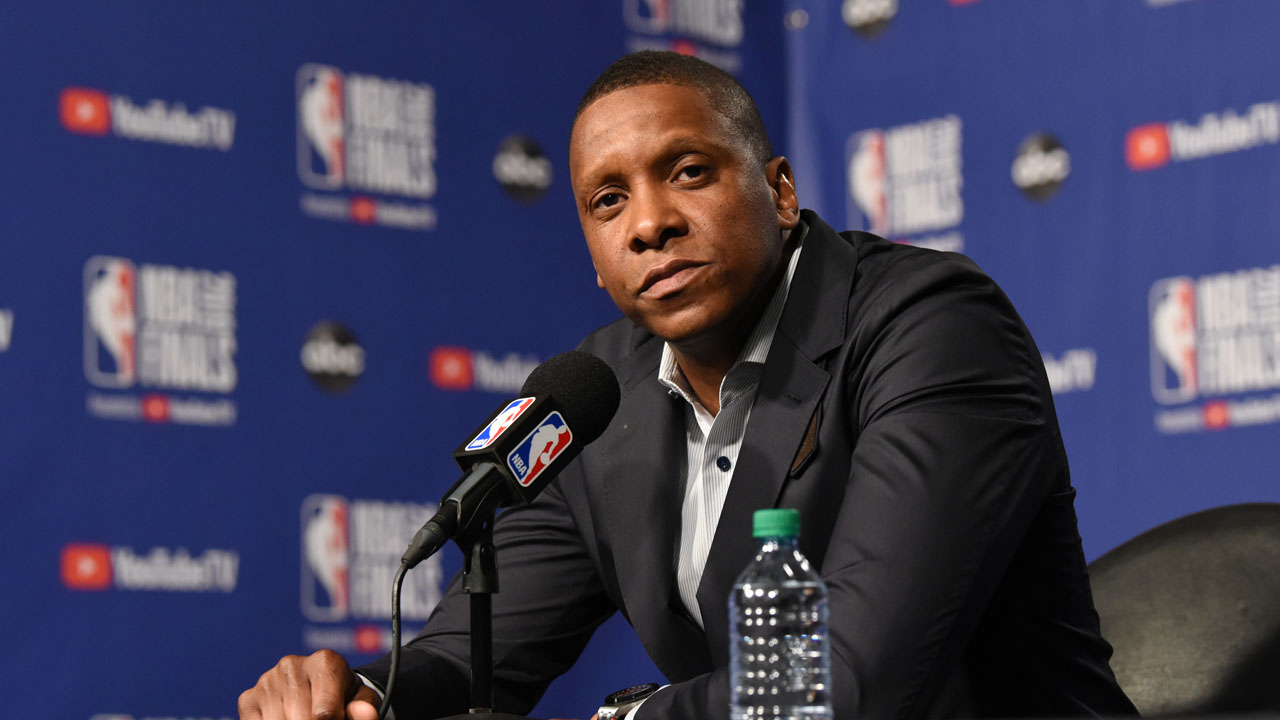
That moment has arrived again with Masai Ujiri, who has officially taken on a powerful new role with the Dallas Mavericks as President of Basketball Operations and Alternate Governor.
It is one of the most influential front-office positions in the league, placing an African-born executive at the center of a franchise trying to rebuild into a championship contender.
A new era begins in Dallas
The Mavericks’ leadership change marks a decisive reset for the organization. After months of instability and internal restructuring, the franchise appointed Ujiri on May 4, 2026, giving him full control over basketball decisions, including roster direction, scouting, and long-term team strategy.
He steps into the role after the departure of former general manager Nico Harrison, joining under team governor Patrick Dumont, who has been guiding a broader effort to restore the Mavericks into a consistent contender.
Ujiri now becomes the central architect of the team’s future.
What his role actually means
This is not a symbolic appointment. His position places him at the top of the basketball hierarchy, responsible for every major sporting decision that affects the franchise’s direction.
That includes shaping the roster, influencing coaching decisions, directing scouting operations, and defining the long-term identity of the team. In practical terms, he is the person responsible for deciding whether the Mavericks remain stuck in mediocrity or evolve into a championship-level organization.
Why the Mavericks chose him
The decision comes down to track record and trust at the highest level. Ujiri is widely respected across the NBA for his leadership during his time with the Toronto Raptors, where he helped build the roster that delivered the franchise’s first NBA championship in 2019.
His reputation is built on bold decision-making, international scouting strength, and the ability to reshape teams without fear of dismantling what is not working. For a Mavericks franchise searching for stability and direction, that profile made him an obvious choice.
The challenge in Dallas
Ujiri inherits a team that has experienced inconsistency in recent years, including front office changes, coaching turnover, and uneven playoff performances despite having talented players on the roster.
The pressure is not just to improve the team, but to redefine it. Dallas is no longer looking for small adjustments. The expectation is a full organizational reset that creates a clear identity and a sustainable path to contention.
A reputation built on decisive leadership
Across the NBA, Ujiri is known for taking action when others hesitate. His career has been defined by strategic trades, aggressive roster decisions, and a willingness to rebuild when necessary instead of maintaining a flawed status quo.
That approach helped transform Toronto into a championship team and earned him one of the strongest reputations in modern basketball management.
Now, Dallas is betting that the same mindset can revive its own championship ambitions.
Why this move matters beyond basketball
Ujiri’s appointment also carries symbolic weight beyond the NBA. Born in England to Nigerian parents and raised in Nigeria, he represents a generation of African talent that has expanded its influence far beyond playing the game.
His rise from international scouting roles to leading a championship franchise, and now to one of the most powerful executive positions in basketball, reflects a broader shift in global sports leadership where African expertise is increasingly central, not peripheral.
The bigger picture for Dallas
For the Mavericks, this hire signals urgency and ambition. It is a commitment to long-term thinking rather than short-term fixes, with Ujiri expected to reshape everything from roster construction to organizational culture.
The expectation is clear: build a team capable of sustained championship contention, not occasional playoff appearances.
The bigger lesson
Masai Ujiri’s move to Dallas is more than a front-office change. It reflects how global the NBA has become, and how leadership in major sports leagues is no longer confined to traditional pipelines.
From scouting international talent to building a championship roster in Toronto, and now leading one of the NBA’s most visible franchises, his journey shows how influence in basketball now extends far beyond the court.
In Dallas, he is being trusted with one of the most difficult tasks in sports: turning potential into a lasting championship reality.